IHS Jesus Christ: Symbol, Meaning, and Creative Uses
The IHS monogram carries centuries of meaning, yet it remains surprisingly relevant for modern creators, designers, and communicators. Whether you encounter it in a historic cathedral, on a liturgical banner, or in a contemporary branding project, the symbol compels attention. Understanding what it represents—and how to work with it—opens doors to thoughtful, resonant work.
IHS is a Christogram, an abbreviation formed from the first three letters of the Greek spelling of Jesus (ΙΗΣΟΥΣ). Over time, it became a visual shorthand for the name of Christ, appearing in manuscripts, altars, vestments, and architectural details across Christian traditions. It carries theological weight, but also offers a striking visual element that can anchor a design, inspire a campaign, or deepen a message.
For anyone looking to create with intention, the IHS monogram is more than an ancient mark. It is a bridge between history and present-day expression, between faith and form.
What IHS Jesus Christ Represents and Why It Endures
Before diving into creative possibilities, it helps to grasp the core meaning. The letters I, H, and S (sometimes rendered as IHC) stand for the name of Jesus in Greek. In Latin contexts, they were later interpreted as Iesus Hominum Salvator—Jesus, Savior of Mankind. This dual linguistic heritage gives the symbol a layered identity, rooted in scripture and shaped by centuries of devotion.
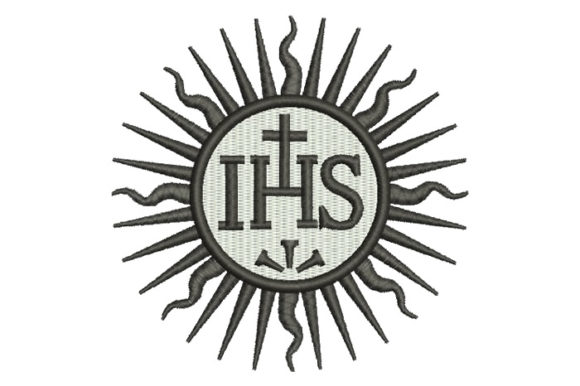
The monogram gained prominence through Saint Bernardine of Siena in the fifteenth century. He encouraged the faithful to display the IHS as a focal point for prayer and a public declaration of faith. The Society of Jesus, the Jesuits, later adopted it as their emblem, adding the cross and three nails. That version remains widely recognized today.
What makes IHS interesting for creative work is its compact visual nature. Three letters. A cross. Nails. A sunburst of rays. Each element carries meaning, but the whole remains clean and adaptable. It works as a standalone mark, part of a pattern, or a subtle watermark. It does not require explanation for those familiar with Christian iconography, yet it invites curiosity from those who are not.
Design Possibilities with the IHS Monogram
Creators across disciplines can find a place for this symbol. The key is treating it with respect while exploring fresh approaches. Here are several directions worth considering.
Branding and Identity Projects
For faith-based organizations, ministries, or Catholic businesses, the IHS monogram offers an immediate sense of identity. It communicates heritage and conviction without relying on generic crosses or stock imagery. A well-designed IHS mark can function as a logo, an icon for social media profiles, or a watermark for official documents.
Consider working with a minimalist approach. A single-color line version of the monogram, with clean strokes and balanced negative space, can stand on its own. Pair it with a modern sans-serif typeface for a contemporary feel, or with a serif font to echo tradition. The monogram also works well inside a circle, shield, or other geometric frame, giving it a badge-like quality that fits merch, stationery, or signage.
Print and Editorial Design
Magazines, bulletins, books, and prayer cards benefit from a thoughtful use of IHS. It can appear as a chapter opener in a devotional book, a repeating motif in the margins of a liturgical guide, or a subtle background element on a cover. Because the monogram is compact, it does not compete with body text. It reinforces the theme without shouting.
For editorial projects, try experimenting with scale. A large, faded IHS behind a title page creates depth and atmosphere. A small, crisp version beside a section heading acts as a visual anchor. The monogram also pairs well with ornamental borders, floral patterns, or gold foil accents for special editions.
Digital and Social Media Content
On screens, the IHS monogram needs to remain legible at small sizes. Simplified versions work best for profile pictures, app icons, and email headers. For Instagram or Pinterest, consider creating a series of posts that explore the meaning of each element: the cross, the nails, the rays. This educates the audience while building visual consistency.
Short videos or animated loops showing the monogram being drawn or illuminated can perform well on social platforms. They tap into the current interest in process and craftsmanship. Even a simple fade-in with a soft glow can elevate a static post.
Using IHS in Content and Storytelling
Beyond visual design, the IHS symbol can inform written content, presentations, and teaching materials. Writers, educators, and speakers can draw on the monogram to structure or illustrate their messages.
Blog Posts and Articles
An article series centered on Christian symbols could feature IHS as a starting point. Each post might unpack one aspect of the monogram: the Greek roots, the Latin reinterpretation, the Jesuit connection, or its use in art history. This kind of content serves audiences curious about faith, history, or visual culture. It also provides natural entry points for search topics related to religious iconography and sacred art.
For a more personal angle, writers can share how the IHS symbol appears in their own tradition or community. A local church might have a stained-glass window, a carved altar, or a processional banner featuring the monogram. Documenting these examples connects the symbol to real places and practices.
Presentations and Workshops
If you lead workshops on faith and creativity, the IHS monogram makes an excellent case study. Show participants how a simple mark can carry deep meaning and how that meaning translates across media. Invite them to sketch their own versions, experimenting with letterforms, ornamentation, and color. This hands-on approach works well for confirmation classes, art groups, or parish retreats.
Adapting IHS for Different Audiences and Contexts
The same symbol can speak differently depending on who sees it and where. Being intentional about these variations helps you avoid missteps and maximize impact.
Traditional and Liturgical Settings
In churches, chapels, and formal liturgical materials, the IHS monogram should retain its historic character. Use gold, deep red, or navy. Include the cross and nails. Place it within a sunburst or a gothic arch. The goal is to evoke reverence and continuity. Avoid overly trendy fonts or low-resolution renders. Hand-drawn or vector versions inspired by medieval manuscripts work well here.
Contemporary and Youth-Oriented Contexts
For younger audiences or casual environments, the monogram can be simplified and modernized. Consider a single-line drawing style, a black-and-white tattoo-inspired version, or a geometric interpretation. Use it on T-shirts, stickers, phone backgrounds, or social media templates. The trick is to keep the symbol recognizable while stripping away decorative details that might feel dated.
Interfaith and Educational Contexts
When presenting IHS in a museum, classroom, or interfaith setting, focus on historical and cultural context. Explain the Greek origin, the medieval devotion, and the artistic traditions. Avoid assuming familiarity. Provide clear captions and references. In these settings, the monogram serves as a window into a broader tradition, not a statement of belief.
Practical Recommendations for Working with IHS
Whether you are designing, writing, or teaching, a few principles will keep your work with the IHS monogram clear and effective.
Prioritize Legibility
The letters I, H, and S can blur together when scaled down or rendered in ornate styles. Test your design at the size it will actually appear. If the cross or nails become ambiguous, simplify. A clean, readable monogram serves its purpose better than a complicated one that no one can decipher.
Respect the Symbol's Weight
IHS is not a generic decorative element. It carries religious significance. Avoid using it in ways that trivialize or parody that meaning. This does not mean creativity is off limits, but that creativity should proceed from understanding. If you are unsure, consult with someone familiar with the tradition or do additional research on the monogram's history and use.
Maintain Consistency Across Formats
If you use IHS in multiple places—website, social media, print, signage—keep the visual treatment consistent. Use the same color palette, stroke weight, and proportions. This builds recognition and reinforces whatever association you are building. A style guide, even a simple one, helps maintain coherence.
Explore Variations Thoughtfully
There is no single correct version of IHS. Some include a cross above the H. Some add three nails below. Some surround the letters with rays. Others omit everything except the letters themselves. Choose the variation that fits your context. For a sober memorial piece, a bare monogram might be best. For a festive banner, rays and gold details add brightness.
Finding Inspiration in the Details
One of the most practical ways to generate ideas is to study historical examples. Look at illuminated manuscripts from the medieval period, Jesuit emblem books from the Baroque era, and modern liturgical art from the twentieth century. Each period interpreted IHS differently. Notice how the letterforms changed, how the surrounding ornaments shifted, and how the symbol was placed within larger compositions.
You can also gather inspiration from non-Christian visual traditions. Monograms and sacred marks appear in many cultures. Seeing how other traditions handle abbreviated sacred names can suggest new approaches to letter arrangement, framing, and color.
Finally, consider collaborating with calligraphers, lettering artists, or type designers. The IHS monogram lives at the intersection of letterform and symbol. A skilled hand can bring out subtleties that a standard font cannot.
Bringing IHS into Your Own Work
The step from inspiration to application can feel daunting, but it does not require a large project. Start small. Create a simple digital file of the IHS monogram in a style that resonates with you. Use it as a personal watermark, a bookmark, or a header for a document. See how it feels to have the symbol in your everyday toolkit.
From there, expand. Offer a monogram design to a local parish or ministry. Write a short article about the history of IHS for a church bulletin or blog. Design a simple social media graphic for a feast day. Each small application builds familiarity and confidence.
Over time, you will develop your own set of approaches, preferences, and standards. The IHS Jesus Christ monogram is not a fixed object to be copied, but a living mark that continues to find new expression. Your work, done with care and understanding, becomes part of that long line of creative witness.