The Enduring Significance of Jesus on the Cross: History, Theology, and Culture
The crucifixion of Jesus of Nazareth stands as one of the most scrutinized and influential events in human history. Far from being merely a religious symbol, the image of Jesus on the cross carries profound weight across disciplines, from historical inquiry and theological debate to artistic expression and personal psychology. To understand its true depth, one must move beyond a simple visual and engage with the layered realities it represents.
The Historical and Legal Realities of the Crucifixion
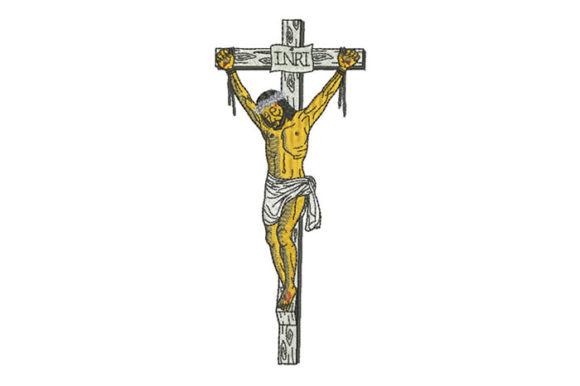
Before interpreting the meaning of the cross, it is essential to anchor it in the stark reality of Roman execution. Crucifixion was a deliberately public, agonizing, and humiliating form of capital punishment reserved for slaves, rebels, and the most despised criminals. The process involved scourging, which alone could be fatal, followed by the forced carrying of the horizontal beam (patibulum) to the execution site, typically outside the city walls for maximum visibility. The specific location of Golgotha, or "the place of the skull," situated Jesus within the landscape of imperial power and religious tension. The charge affixed above him—Jesus of Nazareth, King of the Jews—was both a legal indictment and a political mockery, demonstrating how Rome dealt with anyone perceived as a threat to the established order.
Historical sources beyond the New Testament, including the Roman historian Tacitus and the Jewish historian Josephus, corroborate the fact of Jesus's execution under Pontius Pilate. This historical bedrock is crucial because it separates the event from mere mythology. The physical reality of crucifixion—the asphyxiation, the exposure, the prolonged trauma—underscores the radical nature of what early Christians claimed: that the divine had fully entered into the most degrading form of human suffering. Understanding the brutal mechanics of this death helps modern audiences appreciate why the symbol of the cross was initially a scandal and a stumbling block, rather than a mark of honor.
Theological Frameworks: Atonement and the Meaning of Sacrifice
The New Testament authors did not simply report the death of Jesus; they interpreted it through the rich tapestry of Jewish scripture and ritual. The crucifixion was understood as a fulfillment of the Passover lamb, the suffering servant of Isaiah, and the sacrificial system of the Temple. From these roots emerged several theological frameworks, known as theories of atonement, each explaining what Jesus on the cross accomplished for humanity.
- Substitutionary Atonement: This framework posits that Jesus died in the place of sinners, bearing the penalty of sin that humanity deserved. It emphasizes justice and the legal, or forensic, aspect of salvation. The cross, in this view, satisfies the righteous requirements of a holy God, allowing for forgiveness without compromising divine integrity.
- Christus Victor: Rather than focusing on legal penalty, this model presents the cross as a decisive battle. Jesus descends into the domain of death and the powers of evil, disarming them through his own death and resurrection. The cross is thus the victory that liberates humanity from bondage to sin, death, and the devil. This was the dominant view of the early church for centuries.
- Moral Influence Theory: This perspective emphasizes the transformative effect of the cross on the human heart. The ultimate demonstration of self-sacrificial love on the cross awakens a reciprocal love and repentance in the observer. God does not need to be appeased; rather, humanity needs to be reconciled to God, and the cross provides the ultimate catalyst for that change.
- Scapegoat Theory (René Girard): A more contemporary anthropological lens, this theory sees the cross as exposing and dismantling the foundational mechanism of human society: the scapegoat. The crowd unites against a single victim, but in the case of Jesus, the victim is innocent. The resurrection reveals this innocence, thereby unmasking the violence of the scapegoat system and providing an alternative path for human community based on forgiveness rather than blame.
These frameworks are not mutually exclusive. Together, they form a multidimensional picture of why the early church saw the cross as the pivot of cosmic history. The image of Jesus on the cross is a legal declaration, a military victory, a moral exemplar, and a social critique all at once.
The Paradox of Power and Vulnerability
One of the most striking characteristics of the cross is its radical inversion of conventional power structures. In the ancient world, power was demonstrated through military might, wealth, and social status. The cross presented a God who conquers not by force, but by surrender; not by inflicting suffering, but by absorbing it. This paradox—strength made perfect in weakness—became a cornerstone of Christian ethics. It challenges individuals and institutions to reconsider what true authority looks like. The image of Jesus on the cross suggests that lasting influence is rooted in service and sacrifice, rather than domination and control. For leaders, educators, and business owners, this presents a profound consideration: is it possible to lead through vulnerability and still be effective? The historical impact of the cross suggests that this counter-intuitive path carries immense, transformative power.
Forgiveness, Suffering, and Identity: Practical Dimensions
The relevance of the crucifixion extends directly into daily human experience. One of its most immediate applications is in the realm of forgiveness. The words attributed to Jesus on the cross—"Father, forgive them, for they know not what they do"—provide a model for releasing personal grievances and breaking cycles of retaliation. For professionals dealing with conflict or individuals carrying deep relational wounds, the cross offers a framework for costly, proactive forgiveness that doesn't require the offender to earn it first.
Furthermore, the cross speaks directly to the universal problem of suffering. The cry of dereliction, "My God, my God, why have you forsaken me?" resonates powerfully with anyone who has felt abandoned or overwhelmed by pain. Instead of offering a philosophical explanation for suffering, the cross offers presence. It demonstrates that God is not a distant observer but a participant in the deepest human agony. This provides a unique source of comfort and endurance for those facing illness, loss, or injustice. The practical upshot is a spirituality that is deeply realistic about the existence of pain while remaining hopeful about its ultimate redemption.
Finally, the cross establishes a new basis for identity. The apostle Paul's declaration "I have been crucified with Christ" speaks to a fundamental shift in self-understanding. The cross dismantles the ego's need to prove itself through achievement, status, or moral performance. For the believer, identity is no longer rooted in what one does, but in what Christ has done. This has significant implications for personal well-being, freeing individuals from the exhausting pursuit of self-justification and allowing for a healthier, more secure sense of self. In a culture obsessed with branding and personal success, the cross offers a radical re-centering of human worth.
Cultural Resonance: Art, Music, and the Creative Imagination
No discussion of Jesus on the cross would be complete without acknowledging its immense impact on the arts. The crucifixion has been a central subject for Western artists for two millennia, each era bringing its own theological and emotional emphasis. The grotesque realism of Matthias Grünewald's Isenheim Altarpiece places the viewer in the presence of physical torment, designed to comfort plague-stricken hospital patients with a God who knew their suffering intimately. In stark contrast, Salvador Dalí's Christ of Saint John of the Cross presents a perspective from above, emphasizing the cosmic, serene, and mathematically perfect nature of the sacrifice. The diversity of artistic interpretation highlights the depth and ambiguity of the event.
In music, Johann Sebastian Bach's St. Matthew Passion stands as a monumental meditation on the passion narrative, using complex harmonic language to evoke the weight of the crucifixion. In contemporary culture, the image persists in film, literature, and popular music, often serving as a metaphor for ultimate sacrifice, unjust suffering, or redemptive love. For creators and artists, the cross provides an inexhaustible reservoir of symbolic meaning, one that deals with the extremes of the human condition—betrayal, injustice, love, and hope.
Contemporary Critiques and the Continuing Conversation
Any balanced exploration of the cross must engage with serious critiques. Feminist and liberation theologians have raised concerns that certain interpretations of atonement, particularly those emphasizing substitutionary punishment, can be used to endorse passive suffering in the face of abuse or oppression. The question is critical: does the cross inspire people to resist evil, or does it encourage them to endure it without complaint? A robust contemporary theology of the cross emphasizes that Jesus's death was a freely chosen act of love and resistance against the powers of evil, not a passive submission to an arbitrary divine requirement.
Additionally, the cross must be understood in light of the resurrection. The crucifixion is not the final word. The empty tomb validates the way of the cross as the path to life. It demonstrates that self-giving love, while it may lead to death, has the final victory over the forces that seek to destroy it. This eschatological hope transforms the cross from a symbol of mere suffering into a symbol of assured triumph. For modern researchers, educators, and spiritual seekers, the cross remains a dynamic and challenging object of study—one that refuses to be reduced to a simple formula, demanding instead a lifelong engagement with its mysteries.
Whether approached as a historical event requiring investigation, a theological doctrine demanding understanding, or a cultural artifact inviting interpretation, Jesus on the cross remains a defining image. Its ability to speak with equal power to emperors and slaves, to scholars and the unlettered, to the suffering and the joyful, attests to its unique place in the human story. The layers of its significance are inexhaustible, continually offering new insights to those who take the time to look closely.